A commitment to innovation and sustainability
Discover EcoLaserUK’s cleaning results that are transforming many sectors, including automotive, marine, heritage and many more.
Laser cleaning
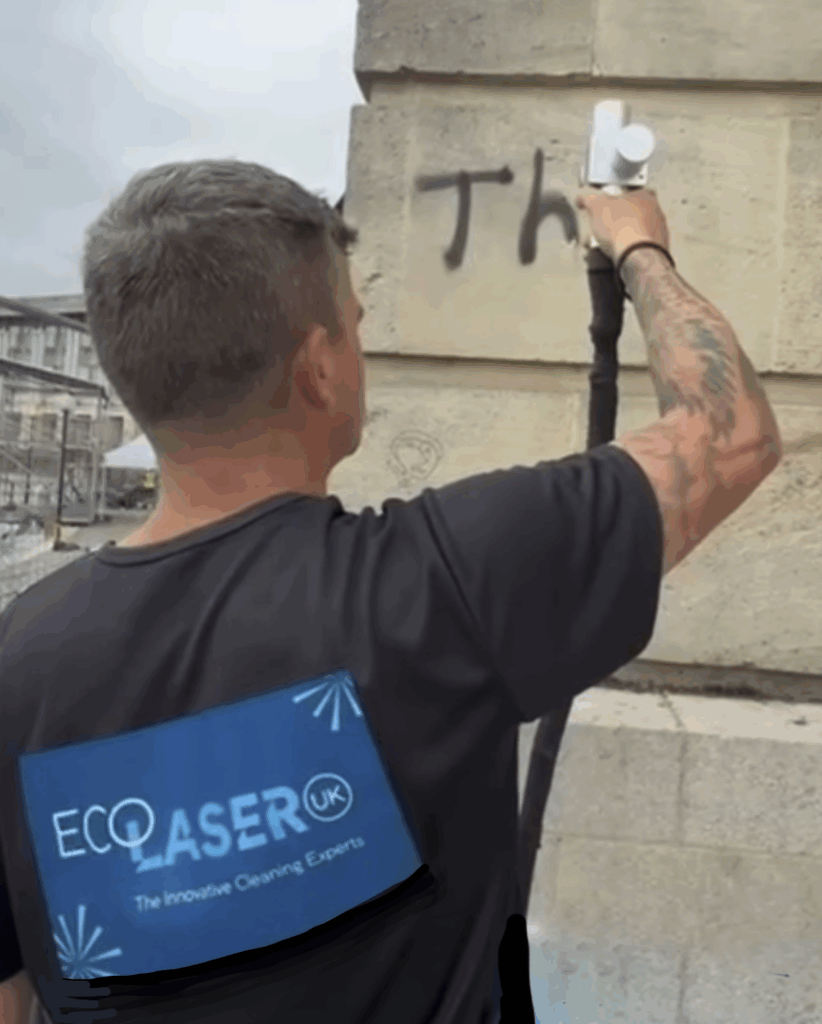
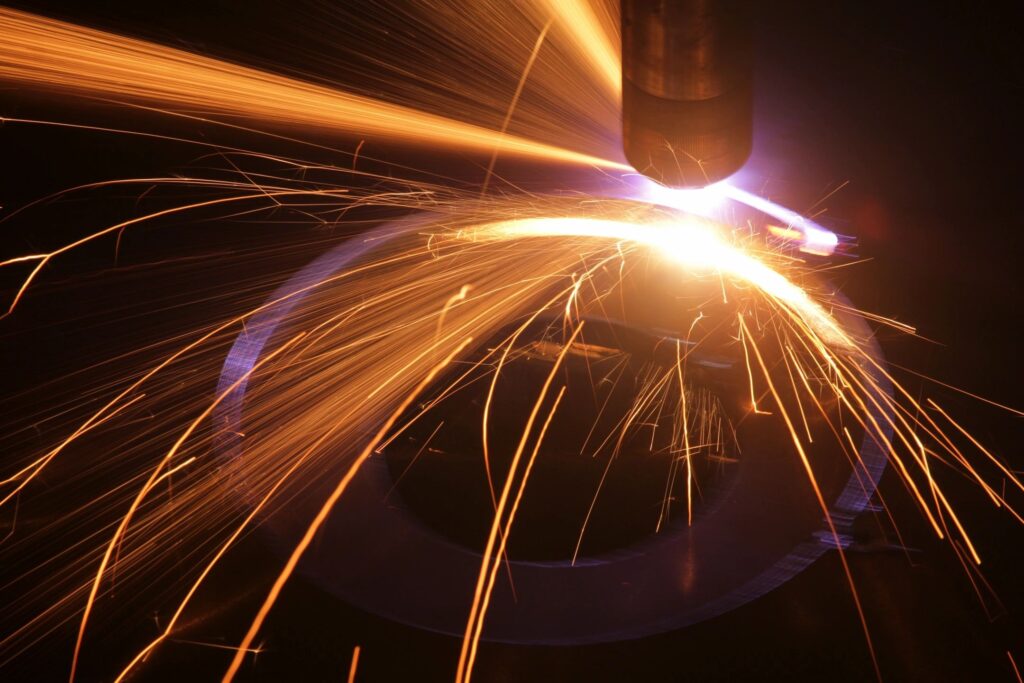
Laser cleaning uses laser energy to quickly remove contaminants from the top surface layer of a material. The laser energy is absorbed by the contaminant, causing it to undergo a phase change directly from a solid to a vapour, bypassing the liquid phase. This makes laser cleaning the only non-abrasive solution that doesn’t damage the substrate, ensuring the material’s performance capability and bringing it back to near its original state.
The dry process is dust-free, free from airborne particles and noise pollution and requires zero cleanup or downtime. Laser cleaning is ideal for food production plants and equipment, eliminating cross-contamination and ensuring first-time pass tests meeting strict food hygiene standards. All organic material is vapourised and extracted without affecting or heating the substrate.
Distinctly different from conventional blasting, laser cleaning ensures that your surface component tolerances remain uncompromised. Pulse laser cleaning guarantees to maintain the surfaces’ performance capability and its near-original state without any downtime.
With zero cleanup, zero noise pollution, and no contaminated blast media or chemicals to dispose of, laser cleaning is today’s most sustainable and effective solution. It significantly reduces your carbon emissions footprint.
How it works
Pulse laser cleaning uses short, high-energy laser pulses to vaporise contaminants from surfaces without damaging the underlying material. This non-contact, non-abrasive method is effective for removing various coatings from metals, ceramics, plastics, and composites.
Laser cleaning is precise, efficient, and environmentally friendly, replacing harmful chemical or abrasive blasting options.
Services & applications
RUST REMOVAL
is a key service we offer using laser technology. Our machines are designed to remove surface and flash rust perfectly, and our higher-powered machines can also remove deeper corrosion.
We work with a wide range of clients, including automotive, marine, fixed plant, precision, and heavy industrial machinery. Unlike blasting or cleaning, our mobile team can deliver exceptional results on-site, saving you time and money on transport and extended shutdown times.
Rust, corrosion, and oxides are inevitable in the lifespan of ferrous and non-ferrous metals, but we can remove them without harming the substrate or the environment.
COATING REMOVAL
Our lasers can remove a wide range of coatings from various surfaces, including wood, such as paint, phosphate, powder, epoxy, varnish, anodised, and galvanised coatings. Laser cleaning is an abrasive-free, dust-free, and chemical-free process that won’t damage the underlying material.
Since all coatings and surfaces are unique, we recommend discussing your specific needs with us first.
INDUSTRIAL MACHINERY CLEANING
with lasers is a versatile and flexible approach that can remove thick and thin contaminants from almost all ferrous and non-ferrous metals. This powerful technology reduces downtime and is ideal for precision machinery and tooling where surface quality is of utmost importance.
Lasers can easily remove a wide range of contaminants, including corrosion, paint, glue residue, biofilm, and release agents, all without damaging the substrate material, helping to extend the life of your machines.
NON-DESTRUCTIVE TESTING (NDT) AND WELD PREP
Laser cleaning is an ideal solution for surface preparation during shutdowns and routine inspections. It leaves your component in an ideal condition, ready for dye penetrant and magnetic particle testing, without causing any change to the substrate surface.
Laser cleaning can improve workflow by removing weld bluing or preparing welds for welding on various materials, including steel, stainless steel, aluminium, titanium, and tungsten.
Pre-cleaning with laser cleaning before dye penetrant testing increases the speed and accuracy of the tests, leading to faster completion times.
Lasers are the ideal tool for metal preparation, removing contaminants such as oil, grease, scale, hydrates, oxide layers, and shop primer, ensuring the best bond and weld quality between metals. After welding, slag can be easily removed with a single pass, saving precious time.
SOOT, FIRE, AND SMOKE DAMAGE REMOVAL
Easily remove soot from fire-damaged surfaces with our portable and flexible approach. Unlike chemical or abrasive methods that can damage the base material, our laser technology restores your property to its best condition possible.
Our mobile operation and efficient cleaning methods allow us to quickly set up and clean soot from almost any surface, including brick, stone, wood, plaster, and stainless steel.
PAINT & GRAFFITI REMOVAL
Laser cleaning offers a safe and chemical-free solution for removing graffiti, stains, and paint. This method is ideal for sensitive environments, as it avoids the need for harsh chemicals.
HERITAGE & RESTORATION
Buildings, statues, and monuments, whether modern or historic, can be restored using laser cleaning – the ideal tool for removing fine layers of dirt, biofilm, oxidation, and even paint or graffiti.
Our lasers are safe and non-contact, meaning they don’t damage or remove the underlying material. This makes them perfect for historic assets and porous surfaces that would be damaged by traditional abrasive or chemical cleaning methods.
By using lasers, we allow surfaces to extend their lifespan by only affecting the contaminant layer and no further.
MEDICAL AND STERILE EQUIPMENT CLEANING
Laser cleaning technology has revolutionised the field of laboratory equipment cleaning, enabling the salvaging of equipment from permanent tarnishing.
Other applications include cleaning metals (steel, aluminium, copper), stone, plastics, glass, and certain composites, particularly for removing rust, oxides, paint and other surface contaminants.
Some of these include de-coating, fire/soot damage, building restoration, rust, corrosion, and oxide removal, industrial machine and tool cleaning, welding and NDT surface preparation and structuring surfaces before painting.
Surface grinding, surface passivation after welding, structuring surfaces before painting, degreasing and removing oil, and pre-treatment and finishing surfaces are all examples of surface preparation techniques used in these applications.
Industries
AUTOMOTIVE INDUSTRY
applies pre-treatment and finishing processes to surfaces, including:
– Surface degreasing
– Removing oxidised top layers
– Surface preparation before joining processes and weld cleaning
– Cleaning moulds of resin and residue left by the manufacturing process
FOOD INDUSTRY
relies on the laser cleaning process for its cleanliness. This process allows for the cleaning of equipment without disassembly, ensuring that no foreign media is introduced into the factory environment. Laser cleaning is particularly useful for cleaning trays and moulds, conveyor belts and all types of food production and handling equipment.
PRINTING INDUSTRY
benefits from the elimination of chemical cleaning. This not only improves the cleanliness of the process but also enhances the cleaning quality, extending the maintenance period of equipment components. By reducing the need for chemical disposal, the entire process becomes more cost-effective and logistically efficient. Downtime is minimised, allowing the printing process to continue while the rest of the factory remains operational.
RUBBER INDUSTRY
can benefit from mobile laser systems for cleaning moulds with complex geometries, eliminating the need for dismantling or removal from the site and minimising downtime.
RAILWAY INDUSTRY
is increasingly turning to laser cleaning as an attractive proposition for operators. This method offers low downtime and effective rail cleaning without the need for traditional blast abrasives.
BUILDING INDUSTRY
Maintenance can be done quickly and thoroughly to remove graffiti, with no environmental impact.
CONSERVATION INDUSTRY
buildings and monuments rely on laser cleaning. This technology allows for precise control over the thickness of the removed impurity layer, safely removing paint, varnish, and discolouration caused by air pollution. Conservators appreciate the selectivity of laser cleaning, as it minimises damage to the surface being cleaned. The compact size of the machines enables some buildings to be cleaned from mobile platforms, eliminating the need for unsightly scaffolding that could remain for months.
Contact us today regarding your project and to discuss any aspect of our innovative laser cleaning service.